
NanoSecure™
Foundational Cyber Hygiene for New Zealand Businesses
Build the essential cybersecurity foundations your organisation needs to reduce risk, strengthen governance, and meet modern compliance expectations.
NanoSecure™ delivers a practical cybersecurity uplift aligned to CIS Controls v8.1 (IG1) and NZISM baseline expectations, helping small and medium businesses establish essential security controls within 2–4 weeks.
Cyber Threats Are Increasing for New Zealand Small Businesses
Most cyber incidents affecting New Zealand organisations occur due to missing foundational security controls.
Small and medium businesses often operate without:
• Asset inventories
• Secure configuration standards
• Multi-factor authentication
• Basic governance policies
• Staff cyber awareness training
This leaves organisations exposed to ransomware, phishing attacks, and operational disruption.
60%of small businesses close within six months of a cyber breach
43%of cyber attacks target small businesses
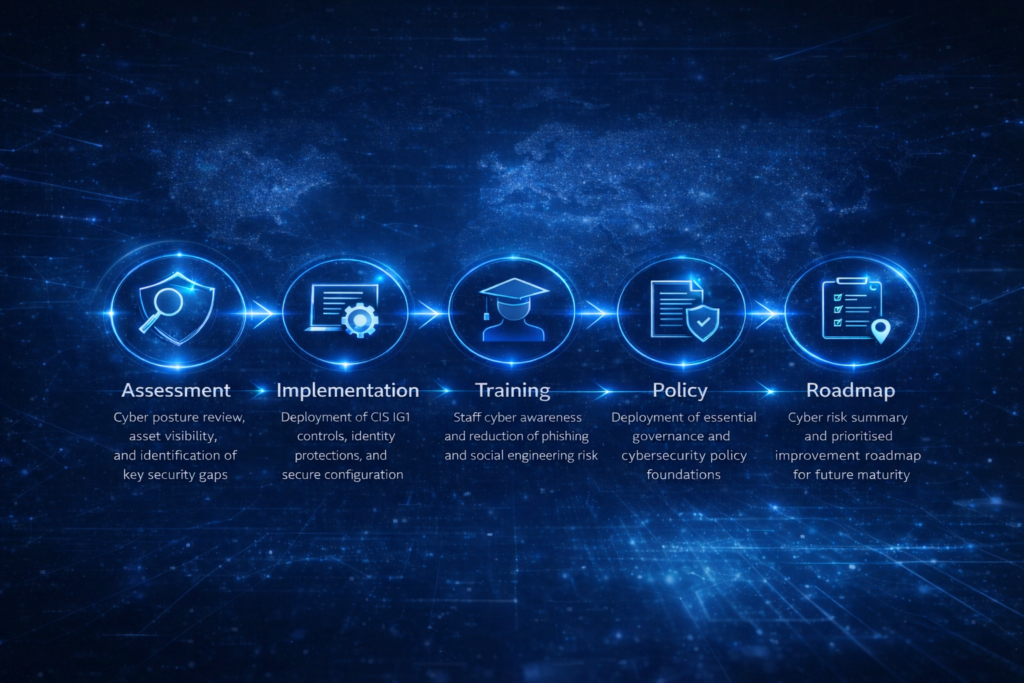
The NanoSecure™ Cyber Hygiene Framework
Key Deliverables
• CIS IG1 aligned security control uplift
• Identity and access control improvements
• Secure configuration and hardening
• Asset inventory and software visibility
• Backup validation and encryption review
• Essential security policy pack
• Staff cyber awareness guidance
• Cyber risk summary and improvement roadmap
These controls address the majority of common SMB attack pathways.
Aligned to Recognised Security Frameworks
CIS Controls v8.1
NZISM Baseline
NIST Cybersecurity Framework
Essential Eight
NanoSecure™ ensures your organisation aligns with recognised industry frameworks used by government, insurers, and security professionals.
Step 1 – Security Assessment
Identify security gaps across people, processes and technology.
Step 2 – Risk Analysis
Prioritise improvements based on business impact and likelihood.
Step 3 – Control Implementation
Deploy security controls aligned with CIS IG1.
Step 4 – Policy & Awareness
Implement essential policies and staff security awareness.
Step 5 – Security Roadmap
Deliver a documented improvement plan for future maturity.
What Your Organisation Gains
- Reduced cyber risk exposure
- Improved governance foundations
- Stronger protection for business systems
- Better preparedness for audits or insurance requirements
- Increased organisational cyber maturity
FAQ
Cyber hygiene refers to the everyday practices that keep your organisation’s systems secure and protected from cyber threats. These include actions such as applying security updates, managing passwords, securing devices, and monitoring systems.
For small and medium businesses, good cyber hygiene significantly reduces the risk of ransomware, phishing attacks, and data breaches.
Most NanoSecure™ engagements take 4-6 weeks depending on the size and complexity of your environment.
During this time we assess your security posture, identify vulnerabilities, and implement practical security controls aligned to recognised frameworks such as CIS Controls v8.1.
Yes. NanoSecure™ was specifically designed for small and medium businesses that need practical cybersecurity without enterprise-level complexity or cost.
The service focuses on implementing essential security controls that deliver the greatest risk reduction
No. NanoSecure™ works alongside your existing IT provider.
Our focus is cybersecurity, risk reduction, and security framework implementation. We collaborate with your internal IT team or managed service provider to strengthen your overall security posture.
Small businesses commonly face threats such as:
• phishing and email compromise
• ransomware attacks
• weak passwords and identity security
• unpatched software vulnerabilities
• lack of monitoring and logging
NanoSecure™ helps organisations implement controls that reduce these risks.
Yes. Small businesses are increasingly targeted because attackers often assume their security controls are weaker.
Many cyber incidents now involve organisations with fewer than 200 employees, making cybersecurity an essential investment for growing businesses.
NanoSecure™ aligns with recognised cybersecurity frameworks including:
• CIS Critical Security Controls v8.1
• NZISM (New Zealand Information Security Manual) baseline practices
• Zero Trust security principles
• Essential Eight (Australia)
These frameworks provide structured guidance for improving security maturity.
Yes. Many cyber insurance providers require organisations to demonstrate security controls such as multi-factor authentication, endpoint protection, and access management.
NanoSecure™ helps organisations implement these controls and strengthen their cybersecurity posture to better meet insurance expectations.
No. NanoSecure™ can be implemented whether you have:
• an internal IT team
• a managed IT provider
• limited technical resources
The service is designed to be practical and scalable for organisations with varying levels of technical capability.
NanoSecure™ evaluates and improves security across areas such as:
• endpoint devices (laptops, desktops, servers)
• identity and access management
• cloud services (Microsoft 365, Google Workspace, etc.)
• email security
• network security controls
Cybersecurity should be reviewed at least annually, or whenever significant changes occur in your environment such as:
• new systems or cloud platforms
• company growth or restructuring
• compliance or regulatory requirements
Regular reviews help ensure your controls remain effective against evolving threats.
The first step is understanding your current security posture.
A cybersecurity consultation allows us to assess your environment, identify key risks, and recommend practical security improvements tailored to your organisation.
Getting started is simple. Schedule a cybersecurity consultation where we review your current environment, discuss your risks, and outline how NanoSecure™ can help strengthen your organisation’s security posture.
Strengthen Your Cybersecurity Foundations
NanoSecure™ provides a practical starting point for organisations looking to reduce cyber risk and improve operational resilience.